Tracing Probability Developments in Craps and Roulette Through Recorded Decades
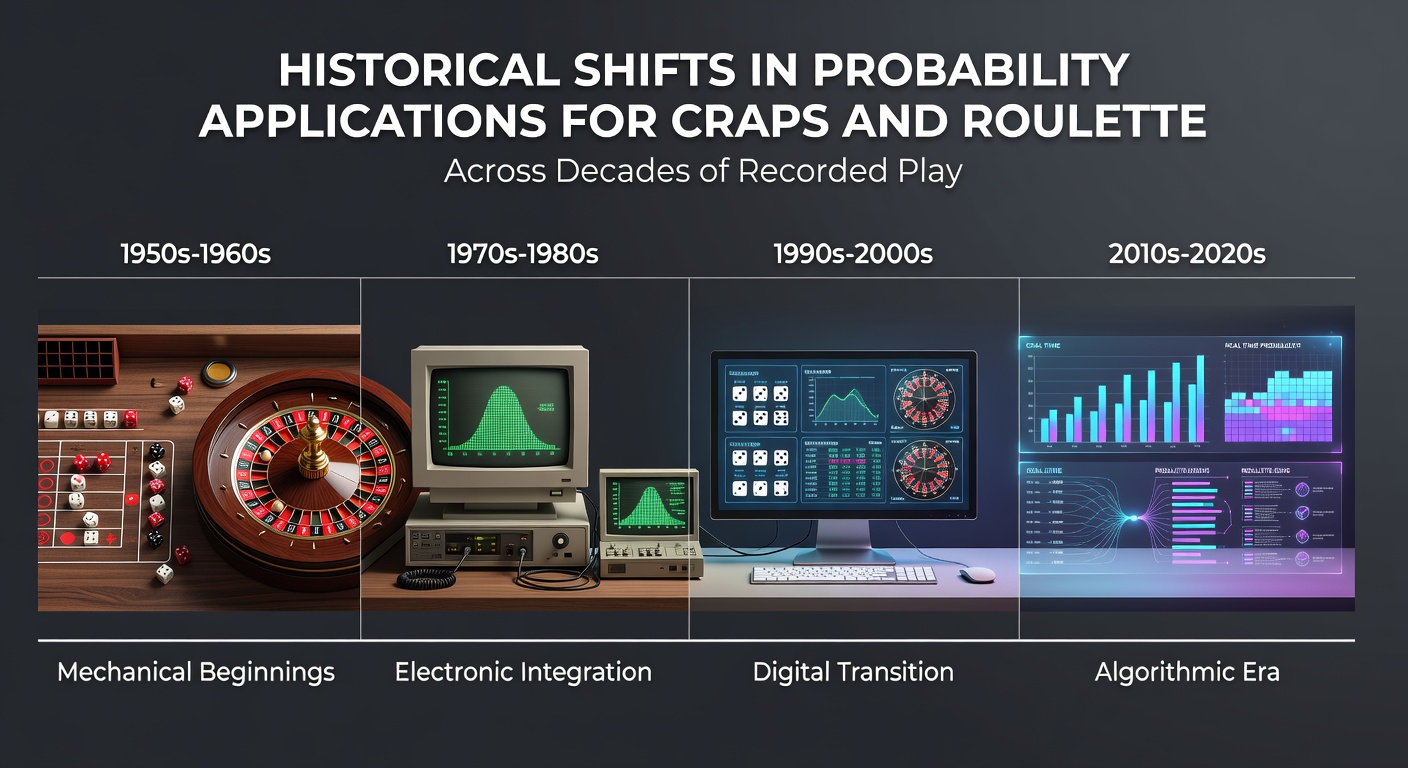
Probability theory took root in the analysis of dice and wheel games during the 17th century when mathematicians began modeling outcomes for games like craps and roulette with systematic calculations. Those early efforts laid foundations that shifted over time as new data sets emerged from casino floors and regulatory records across multiple regions.
Early Foundations in Dice and Wheel Games
Craps traces its lineage to dice games played in Europe and later adapted in American riverboats during the 1800s while roulette developed in France with its numbered wheel and betting layout becoming standardized by the late 1700s. Researchers documented basic odds through repeated trials and observers noted that house edges remained consistent regardless of player streaks because each roll or spin stayed independent of prior results. Data from 19th-century records shows craps pass line bets carried a 1.41 percent house advantage while roulette single-zero wheels held 2.7 percent edges according to preserved casino ledgers from European establishments.
Twentieth Century Data Collection Expands
By the early 1900s American casinos in Nevada began compiling detailed play logs after legalization in 1931 and these records allowed statisticians to refine probability models with larger sample sizes. Observers tracked thousands of craps rolls and roulette spins which confirmed that long-term frequencies aligned closely with theoretical distributions derived from combinatorial mathematics. Industry reports from the Nevada Gaming Control Board during the 1950s and 1960s revealed steady application of these probabilities in setting payout structures while academic papers from North American universities analyzed variance in player bankrolls over extended sessions.
Mechanical roulette wheels underwent precision engineering improvements mid-century and regulators in multiple jurisdictions required regular calibration checks to maintain outcome randomness. Those who've studied gaming archives note that probability applications moved beyond basic odds into risk assessment tools used by casino operators to manage table limits and reserve requirements.
Computer Era Transforms Analysis Methods
The arrival of electronic systems in the 1970s and 1980s enabled real-time probability tracking and simulation software replaced manual tabulation in many operations. Craps tables incorporated electronic dice readers in some venues while roulette wheels connected to central computers that logged every outcome for compliance verification. Research indicates that by the 1990s Monte Carlo simulations became standard for testing game variants and operators applied these tools to forecast revenue under different betting patterns observed across recorded sessions.
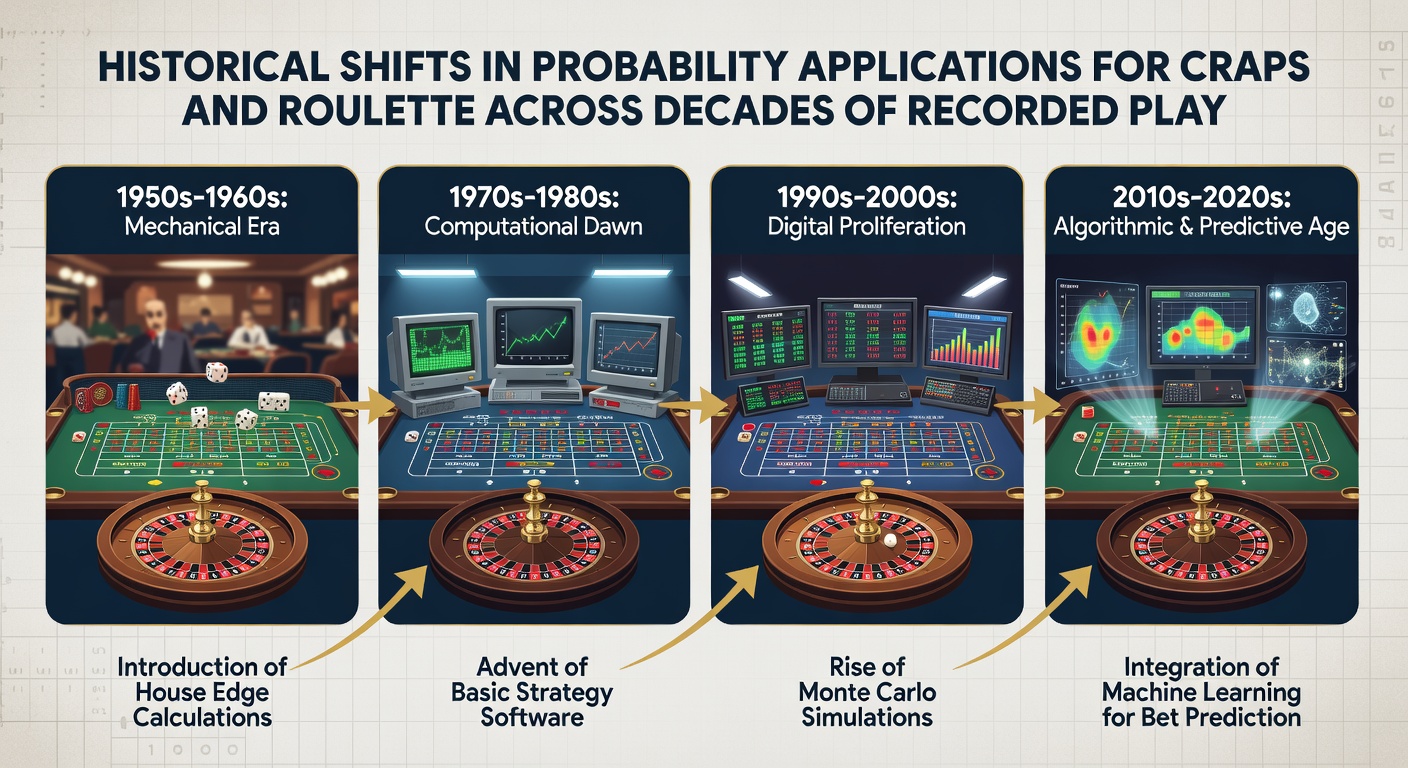
Figures from Australian regulatory bodies during this period showed similar adoption patterns as operators integrated probability software to adjust promotional offers based on actual hold percentages rather than estimates alone. Those who've examined industry reports note that the shift allowed finer control over game volatility while preserving the core mathematical structure established centuries earlier.
Digital Platforms and Contemporary Applications
Online platforms introduced in the late 1990s expanded data collection dramatically because every bet and outcome could be recorded automatically across millions of plays. Probability models now incorporate live feeds from physical wheels and dice in hybrid games while random number generators undergo certification through testing laboratories recognized by authorities in the United States, Canada, and the European Union. Studies published through academic channels demonstrate that recorded play volumes since 2000 have exceeded previous decades by orders of magnitude enabling detection of minor deviations that earlier manual methods could not identify.
In June 2026 regulatory updates in several jurisdictions required enhanced reporting of probability metrics for both craps and roulette variants and operators responded by publishing aggregated outcome distributions drawn from their platforms. Government agencies in North America and Oceania continue to reference these datasets when evaluating new game approvals and the approach maintains continuity with historical practices while adapting to higher data throughput.
Conclusion
Recorded play across decades illustrates steady refinement in how probability applies to craps and roulette from initial combinatorial calculations through large-scale digital monitoring. Regulatory bodies and research institutions maintain oversight that keeps these applications aligned with established mathematical principles even as technology increases the volume and precision of available information.