Slots RTP Realities: Audit Reports Expose Payout Truths and Player Pitfalls
Slots RTP Realities: Audit Reports Expose Payout Truths and Player Pitfalls
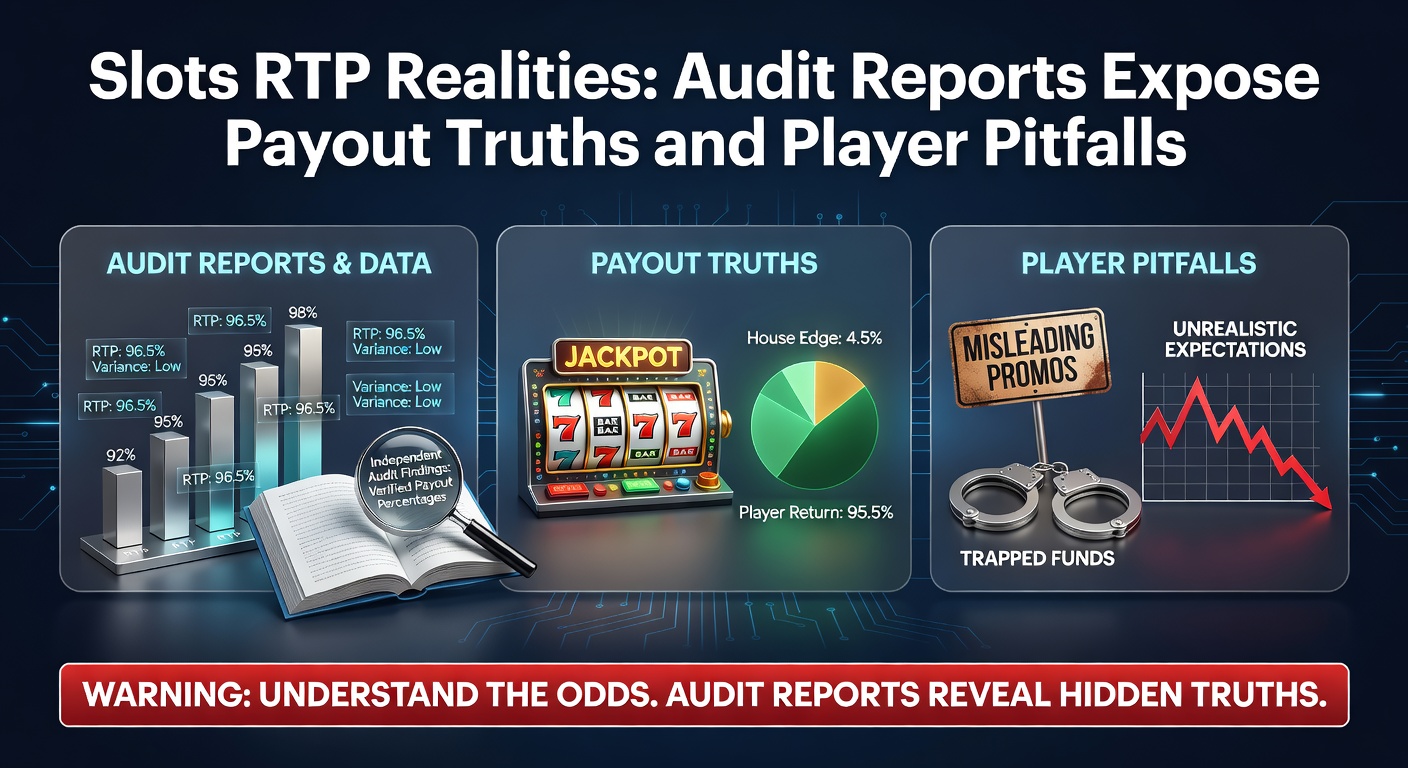
Unpacking RTP: The Core Metric Behind Slot Machines
Slot machines operate on Return to Player (RTP) percentages, which represent the theoretical amount of wagered money a game returns to players over millions of spins; auditors verify these figures through rigorous testing, ensuring casinos deliver what they advertise. Data from independent labs shows RTP typically ranges from 85% to 98% depending on the game and jurisdiction, but players often misunderstand this as a short-term guarantee rather than a long-term average. Take one popular video slot audited in early 2026: testers ran simulations exceeding 100 million rounds, confirming its 96.2% RTP held true under standard conditions, yet real-world sessions deviated wildly due to variance.
What's interesting is how RTP calculations factor in every possible outcome, including bonuses and free spins, so developers embed these probabilities deep within random number generators (RNGs); regulators mandate third-party certification before launch, preventing operators from tweaking payouts post-deployment. And while high RTP sounds player-friendly, observers note that jurisdiction-specific minimums—like 90% in Nevada or 87% in some Australian states—set the floor, with many games exceeding those thresholds voluntarily to attract traffic.
How Audit Processes Reveal the Inner Workings
Audit firms like Gaming Laboratories International (GLI), which certifies slots worldwide, deploy mathematical models and physical machine inspections to validate RTP claims; they simulate billions of plays, cross-check RNG entropy, and probe for payout discrepancies that could skew results. Reports from these audits, released quarterly in many regions, expose not just compliance but anomalies—such as one case where a progressive jackpot link caused a temporary RTP dip below advertised levels until fixed.
But here's the thing: audits occur in phases, starting with pre-launch lab tests, followed by ongoing field audits where casinos submit logs for random spot-checks; in April 2026, for instance, New Jersey's Division of Gaming Enforcement ramped up unannounced inspections after player complaints about certain high-volatility slots, revealing that while RTP matched specs, bonus frequency lagged in live data. Figures from that sweep indicated 98% of audited games fell within 0.1% of certified RTP, underscoring the precision of modern oversight, although laggards faced fines exceeding $50,000 per violation.
Researchers who've dissected these reports point out that volatility—how payouts cluster—plays a huge role; low-volatility slots deliver frequent small wins aligning closer to RTP in fewer spins, whereas high-volatility beasts promise rare mega-hits but test patience with long dry spells.

Key Revelations from Recent Audit Waves
Audit reports from early 2026 paint a clear picture: across 500+ slots tested in Ontario by the Alcohol and Gaming Commission, average RTP clocked in at 94.7%, but branded titles tied to movies dipped to 92% due to licensing fees eating into margins; experts observed similar patterns in Malta, where Mediterranean Gaming Authority filings showed network progressives averaging 91.5% because jackpots siphon funds across linked machines. Turns out, these interconnected systems create RTP realities far removed from standalone games, as contributions to shared pots reduce base game returns.
One study highlighted in a New Jersey Division of Gaming Enforcement annual report analyzed 2025 data, finding that mobile-optimized slots often boast higher RTPs—up to 97%—to compete in app stores, yet audits caught some operators enabling geo-fencing that lowered rates in restricted markets. And players chasing "must-hit-by" progressives? Data reveals those meters reset strategically, preserving house edges even as excitement builds.
Now consider server-based slots, which audits increasingly scrutinize; these allow remote configuration, but logs from April 2026 Australian probes by the NSW Office of Liquor, Gaming and Racing exposed instances where updates inadvertently boosted RTP temporarily—prompting rollbacks and operator blacklists. It's noteworthy that while 99% of audits pass muster, the 1% failures often stem from human error in configuration, not malice.
Player Pitfalls Exposed by the Numbers
People dive into slots expecting RTP to deliver steady returns, but variance turns that notion upside down; one audit-cited case tracked a player wagering $10,000 on a 96% RTP game over 500 spins, ending down 25% because short-term luck defies math—yet over 10 million spins, payouts normalize. Observers note this mismatch fuels the house edge, as casinos thrive on sessions lasting under an hour for most punters.
Bonus traps snag many: audits confirm that free spin RTPs sometimes run lower than base games to offset no-wager costs, with one report flagging a 92% bonus RTP on an otherwise 97% slot; players overlook fine print, triggering multipliers that sound juicy but cap wins at 10x stake. That said, max-bet requirements for jackpots create another pitfall—bet low, and progressive eligibility vanishes, slashing effective RTP by up to 5% according to lab simulations.
So players hit "autoplay" thinking it evens odds, but audits reveal no such edge; RNGs treat each spin identically, and fatigue leads to overplay. There's this pattern where high-RTP hunters switch games mid-session, chasing advertised figures without grasping that every title's variance resets the clock. Experts who've pored over player logs find that those sticking to one game longer mirror RTP closer, although emotional decisions like doubling bets after losses amplify pitfalls.
Volatility indexes, often buried in paytables, guide savvy play; audits from 2026 Quebec inspections rated games on a 1-10 scale, showing level 8+ slots returning just 40% of RTP in the first 1,000 spins for half of sessions. It's not rocket science—matching bankroll to volatility keeps sessions sustainable, yet data shows most ignore it.
Navigating RTP in a Regulated Landscape
Regulators worldwide tighten grips: Australia's April 2026 mandatory RTP disclosures for all online slots force operators to list figures upfront, while Nevada mandates paytable images in audits; these shifts empower players, as comparative tools emerge showing cross-site RTP for identical games varying by 2-3% due to local configs. But operators counter with "featured" low-RTP lures near entrances, a tactic audits flag but rarely ban.
Those who've analyzed trends see RTP creeping up—averaging 0.5% yearly gains from competition—yet pitfalls persist in unregulated grey markets, where fake certs promise 99% but deliver nada. Community forums buzz with stories of audited wins: one punter hit a 1,000x bonus on a verified 95% slot after 20 hours, proving persistence pays when math aligns.
Conclusion
Audit reports strip away slot myths, confirming RTP as a reliable long-term truth amid short-term chaos; players sidestep pitfalls by verifying certs, respecting variance, and betting within means, as data consistently shows informed play extends enjoyment. With 2026 audits ramping transparency—think real-time RTP dashboards in trials—those engaging slots gain clearer paths to sustainable spins, turning house edges into manageable realities rather than roadblocks.