From Vintage Charts to Digital Algorithms: Tracing Baccarat Probability Evolution

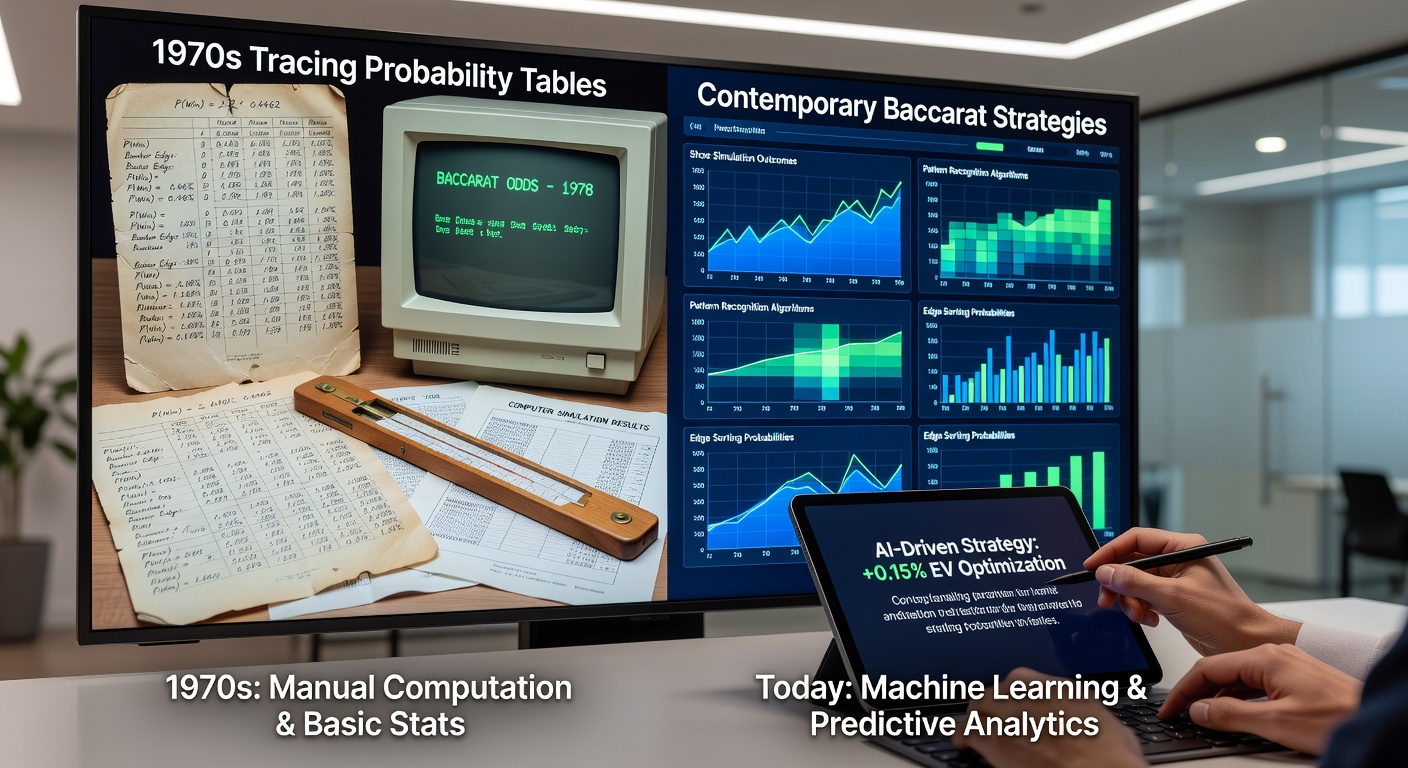
Baccarat probability tables emerged in the 1970s as printed charts that listed house edges and outcome frequencies for banker, player, and tie bets, and these resources guided players through basic odds calculations at a time when most casinos relied on manual dealing and limited data tracking. Researchers compiled the figures from repeated hand simulations, and the resulting sheets appeared in early strategy pamphlets sold near gaming floors in Las Vegas and Atlantic City.
Early Printed Resources and Their Limitations
During the decade, analysts worked with small sample sizes drawn from physical scorecards, so the tables often rounded percentages to two decimal places and grouped results across thousands of hands rather than millions. Observers note that these documents highlighted the banker bet's slight advantage after the 5 percent commission, yet they left little room for adjustments based on deck composition or specific house rules. Casinos distributed some versions as promotional items, and players copied them into notebooks for quick reference during sessions.
Shift Toward Computer-Assisted Calculations
By the mid-1980s, researchers began feeding card outcomes into early personal computers, and the new datasets produced more granular breakdowns that accounted for multi-deck shoes and varying commission structures. Universities in the United States ran small-scale simulations that confirmed the long-standing 1.06 percent house edge on banker bets under standard rules, while also revealing minor fluctuations tied to the number of decks in play. Data from the Nevada Gaming Control Board archives shows these findings aligned closely with floor-level observations collected across dozens of properties.
Integration with Modern Software and Real-Time Modeling
Contemporary platforms load probability engines directly into their interfaces, and these systems update odds after every hand using algorithms that process millions of simulated outcomes per second. Players access the same core percentages that appeared in 1970s tables, but the software layers on additional variables such as side-bet payouts and progressive jackpot triggers. A report issued by the American Gaming Association in 2024 documented that more than 80 percent of regulated online baccarat rooms now display live probability readouts derived from these updated models.
Live dealer studios in May 2026 continue to feed hand results into centralized databases that refine the same foundational numbers, and regulatory bodies in multiple jurisdictions require operators to publish the underlying mathematics for player review. European Gaming and Betting Association statistics indicate steady growth in jurisdictions that mandate transparent probability disclosures, and the trend extends to mobile applications that mirror desktop calculations.
Application in Current Playing Approaches
Modern bettors combine the historical percentages with bankroll management spreadsheets that track session variance, and some programs import live shoe data to adjust wager sizes on the fly. These tools preserve the original insight that banker bets retain the lowest house edge, while adding filters for commission rates and minimum bet thresholds that vary by site. Studies conducted at research institutions have shown that disciplined application of these layered models reduces the impact of short-term fluctuations without altering the long-run expectation.
Conclusion
Probability tables that once fit on single sheets of paper now operate inside sophisticated engines that process live data streams, yet the core relationships between banker, player, and tie outcomes remain unchanged since the 1970s. Regulatory reports and academic simulations continue to validate those early findings while expanding their practical reach across digital platforms worldwide.