From Riverboat Origins to Digital Formats: The Transformation of Craps Gameplay Dynamics

Craps traces its roots to 19th-century Mississippi riverboats where crews and passengers adapted an earlier game known as hazard into a dice contest that featured pass and don't pass wagers alongside simple point rolls, and the confined decks of those vessels shaped early table layouts that emphasized quick resolutions and communal betting circles. Riverboat operators introduced standardized dice and basic payout structures that carried forward when the game migrated to land-based venues in New Orleans and later spread across the American frontier.
Riverboat Foundations and Early Rule Sets
Observers note that riverboat environments demanded compact rules because space limited elaborate side bets, so gameplay centered on core mechanics where shooters established points between four and ten before attempting to repeat them, while crews enforced fair rolls through visible dice inspections. Data from period accounts show average session lengths stayed short due to frequent boat stops and player turnover, which influenced how dealers managed multiple simultaneous wagers on the felt.
By the early 20th century the game had moved into established casinos, and operators expanded betting options to include come and don't come wagers plus place bets that added layers of decision points within each round. These additions lengthened individual rolls yet preserved the fundamental rhythm of establishing and resolving points, and regulatory records from Nevada indicate that craps tables became staples once legalization took hold in 1931.
Land-Based Expansion and Bet Proliferation
Throughout the mid-20th century Las Vegas properties refined table configurations and introduced multi-odds betting that allowed players to increase stakes after point establishment, which altered risk profiles without changing the core random outcomes generated by dice. Research compiled by the University of Nevada, Las Vegas gaming studies program documents how these modifications increased average bet volumes while maintaining house edges that ranged between 1.36 and 1.41 percent on pass line wagers with full odds.
Technological Shifts in the Late 20th Century
Electronic aids appeared in the 1980s when some venues tested automated dice readers that verified outcomes and sped up resolutions, yet traditional hand-thrown dice remained the standard until digital platforms emerged. Those early systems preserved manual shooting but added electronic displays for bet tracking and payout calculations, which reduced dealer errors and allowed simultaneous handling of larger player counts.
Online Transition and Random Number Generator Integration
Digital versions entered the market in the late 1990s when software providers adapted the layout for screen interfaces, replacing physical dice with certified random number generators that produced equivalent probability distributions. According to reports from the Nevada Gaming Control Board, online craps variants achieved regulatory approval in jurisdictions that permitted remote gambling, and these platforms replicated all standard bets while introducing autoplay features that accelerated round pacing compared with land-based tables.
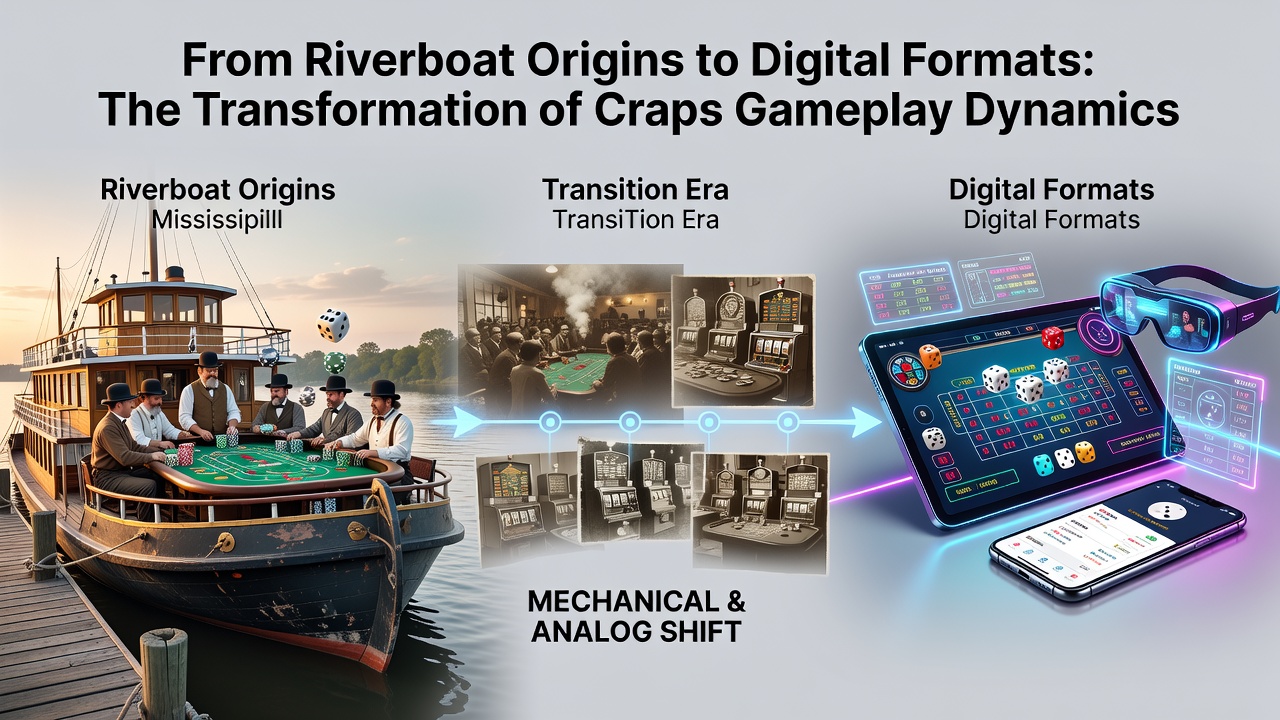
Live dealer studios later combined RNG elements with streamed human shooters, and this hybrid approach restored visual confirmation of dice rolls while retaining the speed of electronic bet placement. Figures from industry tracking services reveal that live craps tables accounted for a growing share of online volume by the mid-2020s as connection speeds improved and mobile devices handled multi-angle video feeds without lag.
Gameplay Dynamics in Mobile and Virtual Environments
Mobile applications further modified interaction patterns because touch interfaces replaced physical chip handling and allowed players to adjust wagers between rolls in seconds rather than waiting for dealer confirmation. Studies published through the Australian Gambling Research Centre highlight how shorter decision windows in app-based craps correlated with increased frequency of side-bet placements such as hardways and proposition bets that carried higher house edges.
Virtual reality prototypes tested in 2025 extended immersion by placing users at simulated tables where avatars represented other participants, and these environments preserved social cues that riverboat players once experienced while introducing camera controls that let individuals inspect dice trajectories from multiple angles. Data compiled through 2026 shows adoption rates remained modest outside specialized platforms yet demonstrated measurable engagement increases during peak evening hours in regions with established licensing frameworks.
Regulatory and Statistical Context Through Mid-2026
By July 2026 several European and North American regulators had updated technical standards for dice simulation algorithms, requiring independent audits that verified long-term return-to-player percentages aligned with physical counterparts. Government agencies in Canada and Australia published comparative analyses indicating that digital craps sessions averaged 15 to 20 percent more decisions per hour than traditional tables, primarily due to automated bet resolution and reduced physical handling time.
Those shifts did not alter underlying probabilities, but they changed how players distributed bankrolls across multiple concurrent tables, a pattern documented in transaction logs from licensed operators. Industry associations such as the European Gaming and Betting Association tracked these trends through aggregated operator data that illustrated broader participation across time zones once 24-hour digital access became standard.
Conclusion
The progression from riverboat dice contests to contemporary digital formats illustrates consistent adaptation of core mechanics to new delivery systems while retaining the mathematical structure that defines craps. Each stage introduced tools that modified pacing, bet accessibility, and social elements without replacing the random foundation established on those early vessels, and ongoing technological refinements continue to shape how participants engage with the game across physical and virtual environments.